The Hidden Impact on Hormones & Health
Drinking alcohol can feel like a way to relax at the end of a busy week, to celebrate, or to be sociable. Like many people, I enjoy a glass of wine or fizz. But as I have learned more about menopause, hormones, and long term health, my relationship with alcohol has changed.
Not from a place of restriction. But from a place of understanding.
Alcohol affects far more than just how we feel the next morning. It influences our hormones, sleep, mood, brain health, and risk of serious diseases. During perimenopause and menopause, when hormones are already fluctuating, alcohol can amplify symptoms and make this stage of life harder than it needs to be.
This article is not about judgement or telling you to stop drinking. It’s about sharing the science, raising awareness, and helping you make informed choices that support your long term health and wellbeing.
Even small changes can have big benefits.
Alcohol and Hormones During Menopause
Perimenopause and Menopause are fundamentally a hormonal transition. Oestrogen, progesterone, cortisol, and insulin all interact closely and alcohol disrupts this delicate balance.
Alcohol can:
• Increase oestrogen levels, which can exacerbate symptoms like hot flushes, mood swings, and heavy periods
• Disrupt sleep, especially deep restorative sleep that supports hormone balance
• Increase cortisol, the stress hormone, contributing to anxiety, belly fat, and fatigue
• Impair blood sugar regulation, worsening cravings, mood swings, and energy crashes
You might be asking why. Well, alcohol is metabolised in the liver, the same organ responsible for processing hormones. When the liver is prioritising alcohol, hormone metabolism becomes less efficient. This can intensify menopause symptoms.
Alcohol and Disease Risk
This is the part many people do not realise. Alcohol is not just a lifestyle choice. Alcohol has been classified as a Group 1 carcinogen, meaning there is strong scientific evidence that it causes cancer. The World Health Organization puts alcohol in the highest cancer risk category.
Some key facts that often surprise people:
• Alcohol causes nearly 12,000 cancer cases every year in the UK
• Around 8 percent of breast cancer cases in the UK are linked to alcohol
• Even one alcoholic drink per day increases breast cancer risk compared to drinking less than one per week
• Each additional daily unit of alcohol increases breast cancer risk by around 6%
Alcohol also increases the risk of:
• Heart disease
• Liver disease
• High blood pressure
• Dementia
• Weight gain
• Type 2 Diabetes
• Anxiety and depression
This isn’t about fear. It is about empowerment. Alcohol is one of the few risk factors we can actually change.
Alcohol and Menopause Symptoms
From working with clients over the past four years, I have seen that alcohol is one of the most common triggers that worsens menopause symptoms. The positive news is that when alcohol is reduced, many people notice significant improvements in their symptoms, often more quickly than they expected.
Alcohol can contribute to:
• Hot flushes and night sweats
• Anxiety and low mood
• Poor sleep
• Brain fog
• Low energy
• Weight gain, especially around the middle
This is why many people notice dramatic improvements when they reduce or quit alcohol.
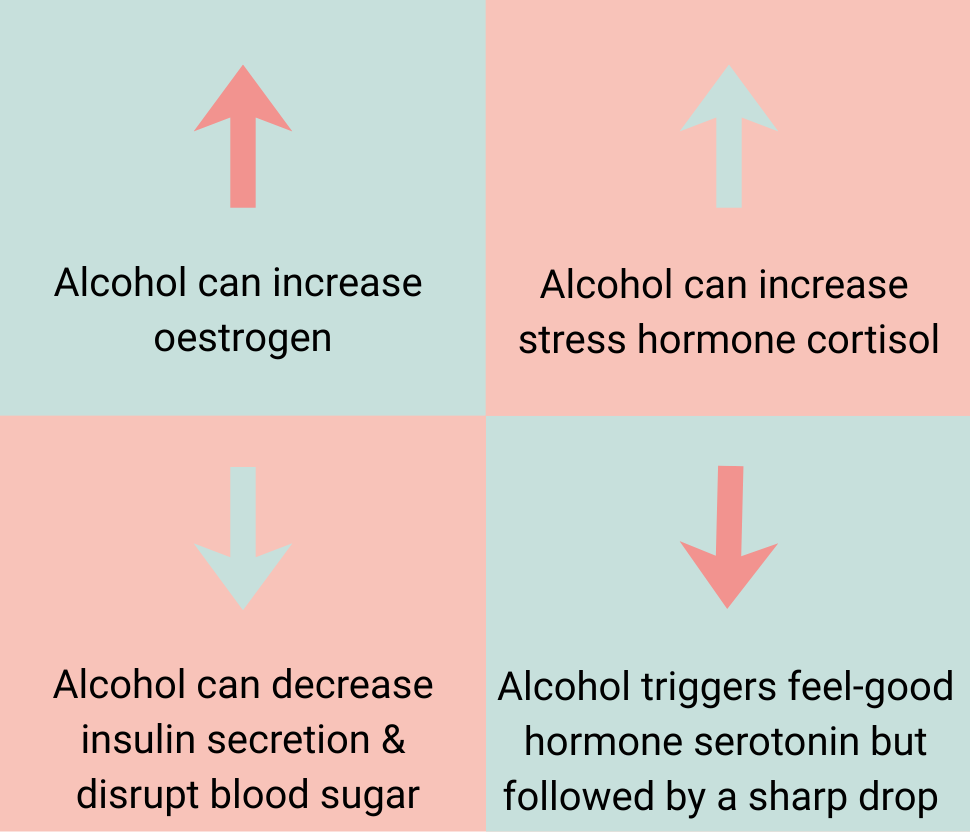
You might be wondering why alcohol has such a big impact. Here is what is happening inside the body when you drink alcohol during perimenopause/ menopause.
Hot flushes and night sweats
Alcohol widens blood vessels, which increases blood flow to the skin and raises body temperature. This can trigger hot flushes and make them more intense.
Menopause already affects the brain’s temperature regulation, and alcohol makes this system more unstable. It can also activate stress hormones during the night, increasing night sweats and sleep disruption.
Poor sleep and insomnia
Alcohol can make you feel sleepy initially, which is why some people use it as a night cap thinking that it helps sleep. However, it actually reduces deep, restorative sleep later in the night.
It disrupts REM sleep, which is essential for brain health, emotional stability, and hormone balance. It also increases waking during the night and can worsen night sweats.
This is why many people feel more tired after drinking, even if they slept for several hours.
Anxiety and low mood
Alcohol affects brain chemicals that regulate mood, including serotonin and GABA.
While it may create temporary relaxation, it increases stress hormones afterwards, which can lead to increased anxiety, irritability, and low mood the following day.
During menopause, when the nervous system is already more sensitive, alcohol can amplify these emotional symptoms.
It’s not relaxation that you’re experiencing, it’s your nervous system shutting down under toxic load, you’re just numbing emotions.
Brain fog and poor concentration
Alcohol affects areas of the brain responsible for memory, focus, and mental clarity.
It also increases inflammation, which impair brain function. Combined with hormonal changes, this can worsen forgetfulness and difficulty concentrating.
Weight gain, especially around the middle
Alcohol temporarily stops the body from burning fat, as the liver prioritises processing alcohol first.
It also increases cortisol, the stress hormone linked to abdominal fat storage, and increases cravings for sugary and high calorie foods.
During menopause, when fat storage patterns are already shifting, alcohol can accelerate weight gain.
Increased cravings and blood sugar instability
Alcohol causes rapid rises and falls in blood sugar, which increases cravings, hunger, and energy crashes.
Stable blood sugar is essential for hormone balance, energy, and mood. Alcohol makes this harder to maintain and can make menopause feel more exhausting than it needs to be.
The positive changes when you reduce or stop drinking
The human body is incredibly resilient. When alcohol is removed, healing begins quickly.
Here is what typically happens:
After 1 Week
• Improved sleep quality
• More stable energy levels
• Reduced anxiety
• Hydration normalises
• Liver starts repairing itself
• Less bloating
Sleep often improves first because alcohol disrupts the natural sleep cycle.
After 2 Weeks
• Improved mood
• Lower anxiety
• Better concentration
• Less brain fog
• Reduced inflammation
• Clearer skin
Many people report feeling calmer and more emotionally balanced.
After 3 Weeks
• Improved hormone balance
• Lower blood pressure
• Better digestion
• Reduced cravings
• Increased motivation
• Sharper memory
This is often when people begin to feel like themselves again.
After 1 Month
• Noticeably improved energy
• Reduced hot flushes/night sweats
• Better weight management
• Improved liver function
• Immune function improved
• Self esteem boosted
Blood pressure and liver health begin improving as alcohol related inflammation reduces.
After 2 Months
• Improved mental clarity
• More stable mood
• Improved metabolism
• Reduced belly fat
• More regulated sleep cycles
• Better digestion and gut health
Hormones become more stable and the nervous system becomes calmer.
After 3 Months
Significant improvements in hormone balance
Reduced long term disease risk
Better emotional resilience
Improved confidence and wellbeing
This is often when people realise how profoundly alcohol was affecting them.
You do not have to quit completely to benefit
One of the biggest myths is that you must quit forever to see benefits. This is not true.
Simply reducing alcohol can significantly reduce cancer risk and improve health.
Even having more alcohol free days each week can improve sleep, hormones, and overall wellbeing. Many of my clients decide to only have a drink at the weekend or do Dry January and Sober October to see positive improvements in their health.
This is about progress, not perfection.
A perspective from Alcohol Freedom Coach - Amanda Foster
“You don’t have to grit your teeth or feel like you’re missing out to break free from alcohol. When you start to let it go, it simply fades into the background. No drama, no deprivation. Suddenly, sleep improves, energy returns, and those menopause symptoms often become far more manageable. Most women are genuinely amazed by how much lighter, calmer, and more like themselves they feel. It’s not about restriction, it’s about reclaiming your life and feeling brilliant in your own skin.”
— Amanda Foster, Alcohol Freedom Coach and Founder of Zerofierce
My personal experience
I still drink occasionally. But I drink far less than I used to. Not because I have to, but because I want to.
Because I sleep better
Because my energy improves
Because I feel calmer
Because my cravings stop
Because I understand the impact alcohol has on my hormones and long term health
And because I still have fun without it
Simple ways to start reducing alcohol
You do not need to make dramatic changes overnight. Small steps can have a big impact.
You might try:
• Having alcohol free weekdays
• Choosing alcohol free alternatives
• Having a non-alcoholic drink in a nice glass and make it feel special
• Alternating a large glass of water between alcoholic drinks
• Finding social activities that don’t revolve around alcohol
• Taking a short break and noticing how you feel
• Setting a personal limit and sticking to it
Many people are surprised by how much better they feel.
Supporting your future health
Menopause is a good time to reflect and an opportunity to reset your health. Reducing alcohol can improve:

• Hormones
• Sleep
• Mood
• Energy
• Brain health
• Long term disease risk
This is not about restriction. It is about supporting your body through one of the most important transitions of your life. Your body is working hard for you. Supporting it is one of the most powerful forms of self care.
To find out more about the Re-Balance programmes to improve menopause symptoms with nutrition and lifestyle, contact sally sally@rebalancebysally.com
To learn more about Alcohol Freedom Coaching with Amanda Foster see website www.zerofierce.com
